AI role-play in management training: Galaxie Conseil's experience
"Who wants to come and role-play the difficult conversation in front of the group?" Silence. Every management trainer knows that moment. Role-play is the exercise that makes people improve the most, and it is the one everyone runs from: the urgent phone call, the detour to the coffee machine, the pairs exercise where you praise Michel for a weak performance because he is a colleague.
Jérôme Delon, managing director of Galaxie Conseil, has been training managers for 24 years. Since March 2026, his programmes include practice conversations with AI characters, built with Face Up. Galaxie Conseil offers them under the name IA Training by Face Up. On 20 October 2026, he explained his method in a webinar hosted by ILDI, alongside Mame-Mor Fall, co-founder of Face Up. Here is the replay (in French, with English subtitles), followed by the key takeaways.
The problem: everyone avoids role-play
For Jérôme Delon, the block has nothing to do with seniority. Executives or not, the scene repeats itself: "I pair up with a colleague, and sometimes my own manager is sitting across from me, and I don't dare." The group's gaze prevents trying, so it prevents mistakes, so it prevents learning.
He spent a year and a half looking for a tool that could go further than questionnaires, because in management, sales or assertiveness training, "we are dealing with behaviour". The answer he built has three stages: before, during and after the classroom session. It addresses the limits of in-person role-play head on.
Before the classroom: a diagnosis in a real situation
Before the session, each participant plays one or two scenarios. The debrief gives the trainer a more objective starting point than each person's self-perception, and makes it possible to tailor the programme to what comes out.
Jérôme Delon is realistic about engagement: he does not guarantee 100% completion, but 60 to 70% of participants complete at least one or two scenarios before arriving in the room. For an optional exercise done upfront, that is a solid basis for starting the training from real situations.
During the classroom: a model first, then everyone on their own
A first run projected in front of the group
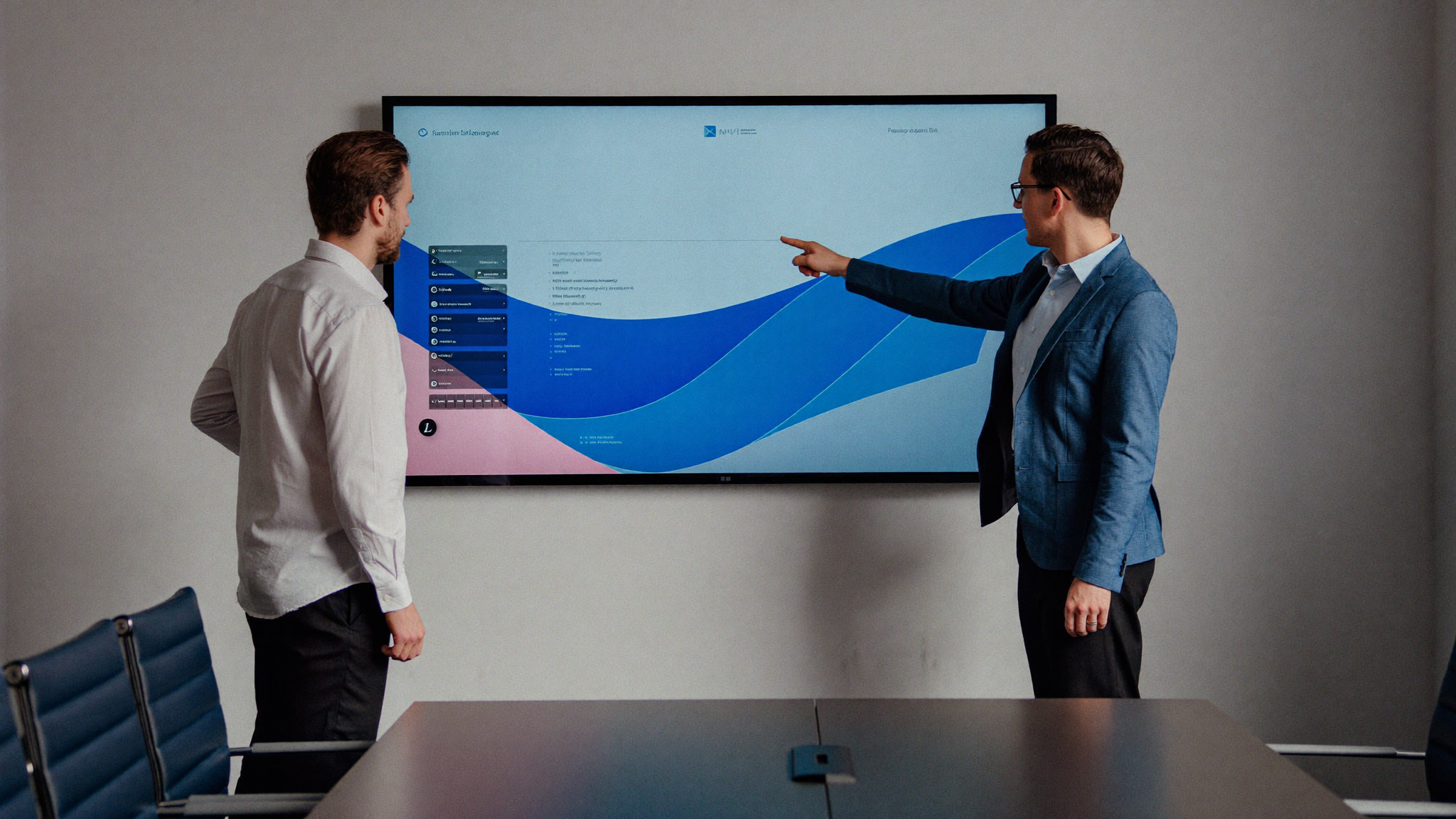
Before leaving each learner alone with a laptop, he connects the computer to the projector: a volunteer plays the scene, the group analyses it. The goal is to get learners to "dare to step into the situation, and above all to make mistakes".
Then practice without an audience
Next, each person practises "in their own bubble", without colleagues judging. In his experience, the reception is positive in 100% of cases. One participant told him after practising: "it gave me an insight nobody had ever given me. I knew it, but nobody had ever put it into words about my non-verbal communication." The debrief covers the words, but also tone, pace and posture.
The demo: praising Karim
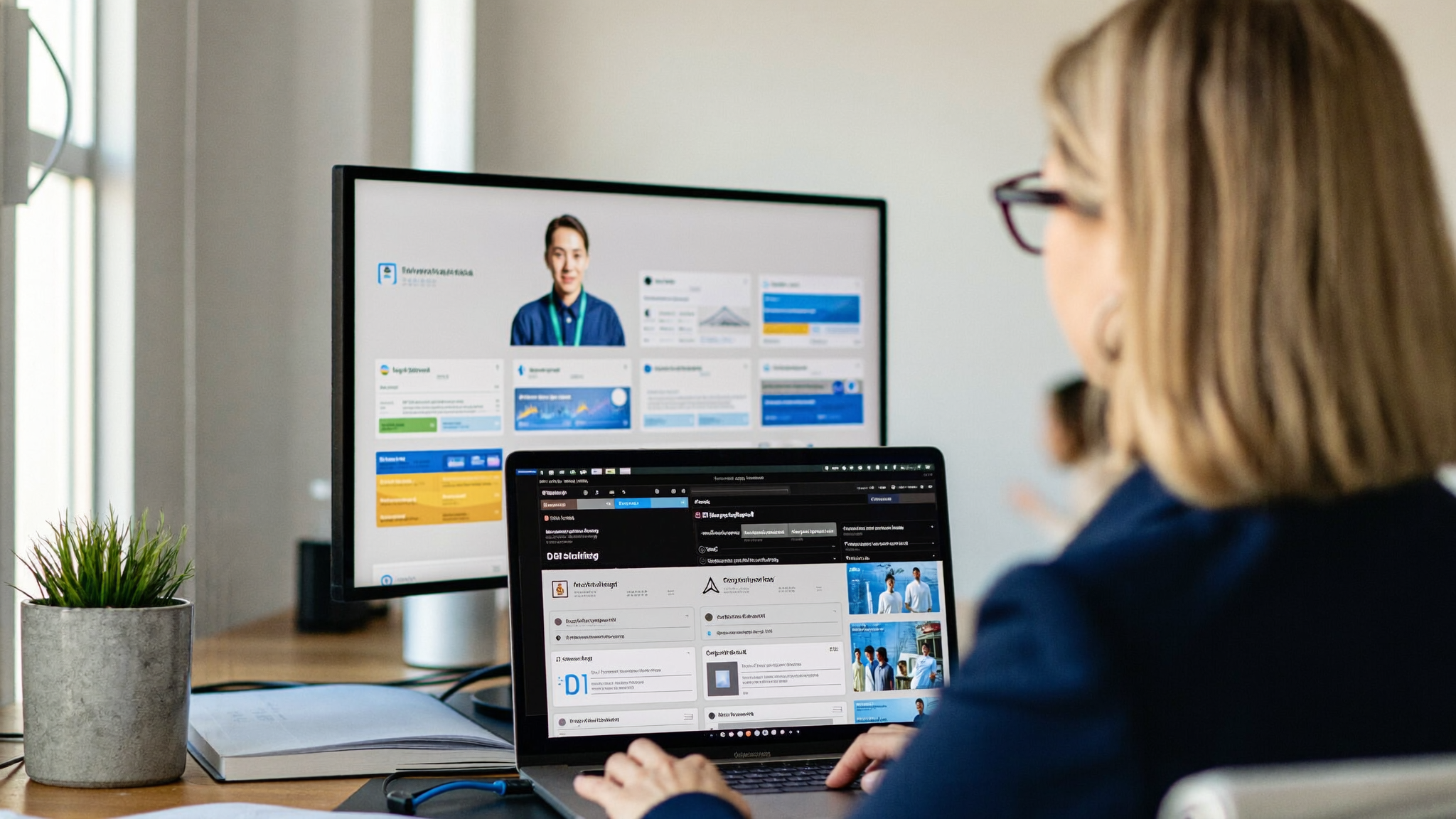
During the webinar, Mame-Mor Fall played a scenario built for ID Logistics live: praising Karim, an order picker for three years, who has trained a temporary worker. Karim downplays it ("I didn't do anything special"), and the manager has to help him recognise what he actually contributed. On screen, progress prompts guide the learner; the trainer can show them at the start of the programme and hide them once the method should be mastered. Karim does not exist: he is an AI.
After the classroom: replay at regular intervals
For Jérôme Delon, one session is not enough to embed a management behaviour. He leaves one to one and a half months between the end of the classroom session and a remote follow-up by video call. In between, each learner completes three practice conversations.
The lever that changed everything is simple: email reminders with a direct link to the scenario. Without reminders, 10 to 20% of learners practised. With them, he reaches 80% of learners who play at least one scenario.
Repetition pays off: on the platform, learners who replay the same scenario gain nearly 38 points on a score out of 100. This is the principle of before-and-after assessment for training organisations.
What gets measured: Qualiopi, best practices, AI Act
Factual evidence for Qualiopi
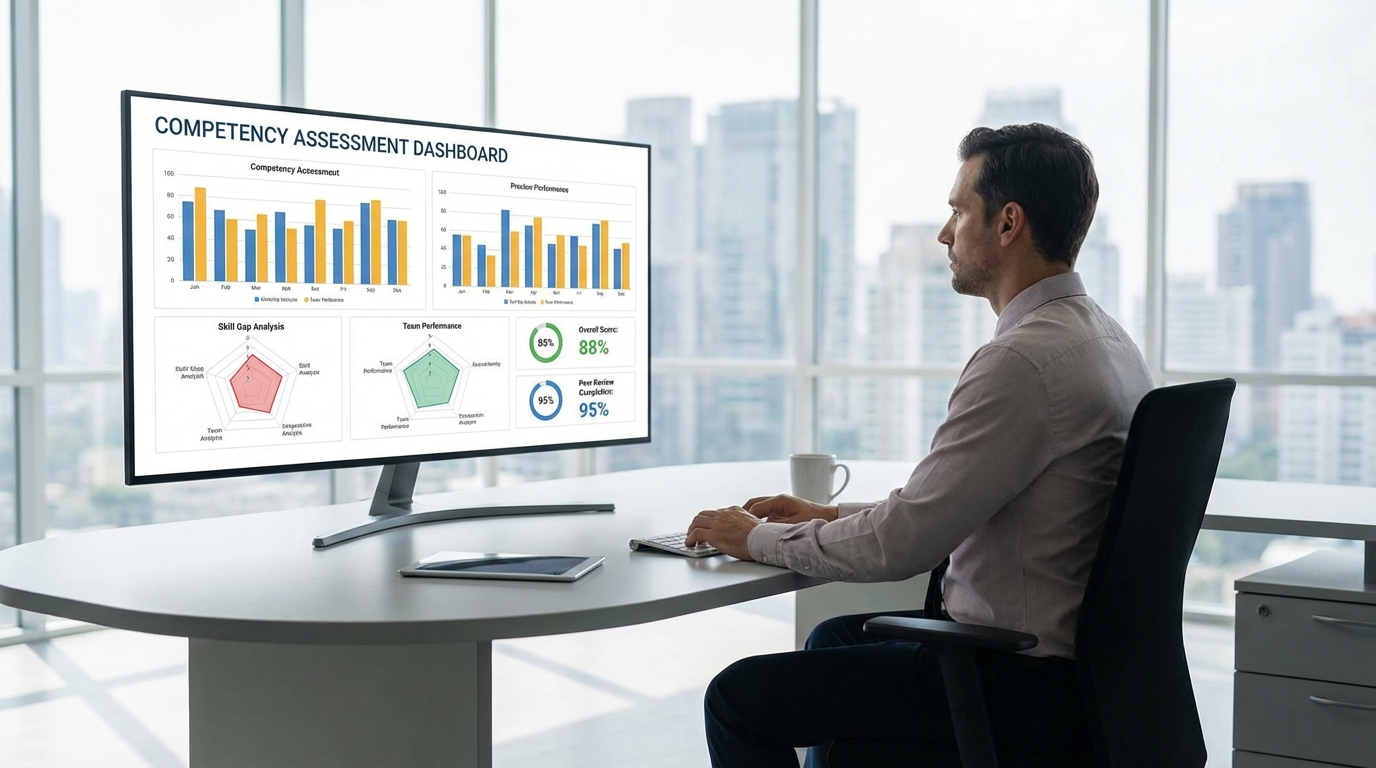
Same scenario, same grid, at entry and at exit: the training organisation can prove each participant's progress during its Qualiopi audit (France's quality certification for training providers). We covered this in detail in proving competency progression for a Qualiopi audit.
What the best do, shared with everyone
Beyond scores, all the sessions of a cohort reveal what the best performers do: more open questions, more rephrasing. The trainer can collect these practices and share them with every learner.
A tool for progress, not for control
The AI Act sets the framework: Face Up is a development tool, not a skills-control tool. The debrief cannot be used for decisions about mobility, career or access to training.
A differentiator for the training provider
Asked whether clients chose him because of this solution, Jérôme Delon answers with facts: every time he presents it, curiosity is there, the pilot gets approved, then the programme continues. Today the tool is opening doors to new clients. Galaxie Conseil has built more than 40 scenarios for its clients, from the production floor to the logistics platform, with its own motto: "AI makes you rehearse. Our consultants make you progress."
Conclusion
Role-play never lacked effectiveness; it lacked a space where people dare to get it wrong. Before the classroom to diagnose, during it to practise without an audience, after it to replay until it becomes a reflex: that is how Galaxie Conseil gets its managers practising. To build a similar programme, see Face Up for training organisations or read how AI role-play compares with traditional role-play.
From reading to practice.
Pick a real-life situation and talk to an AI persona, by video with an avatar or by audio call. 5 to 10 minutes, no account, instant debrief.
Try a scenario →